Oregon DOC unlikely to close EOCI for budget reductions
Even 5% reduction in DOC budget this biennium is 9% increase over 2023-25
By BERIT THORSON | East Oregonian
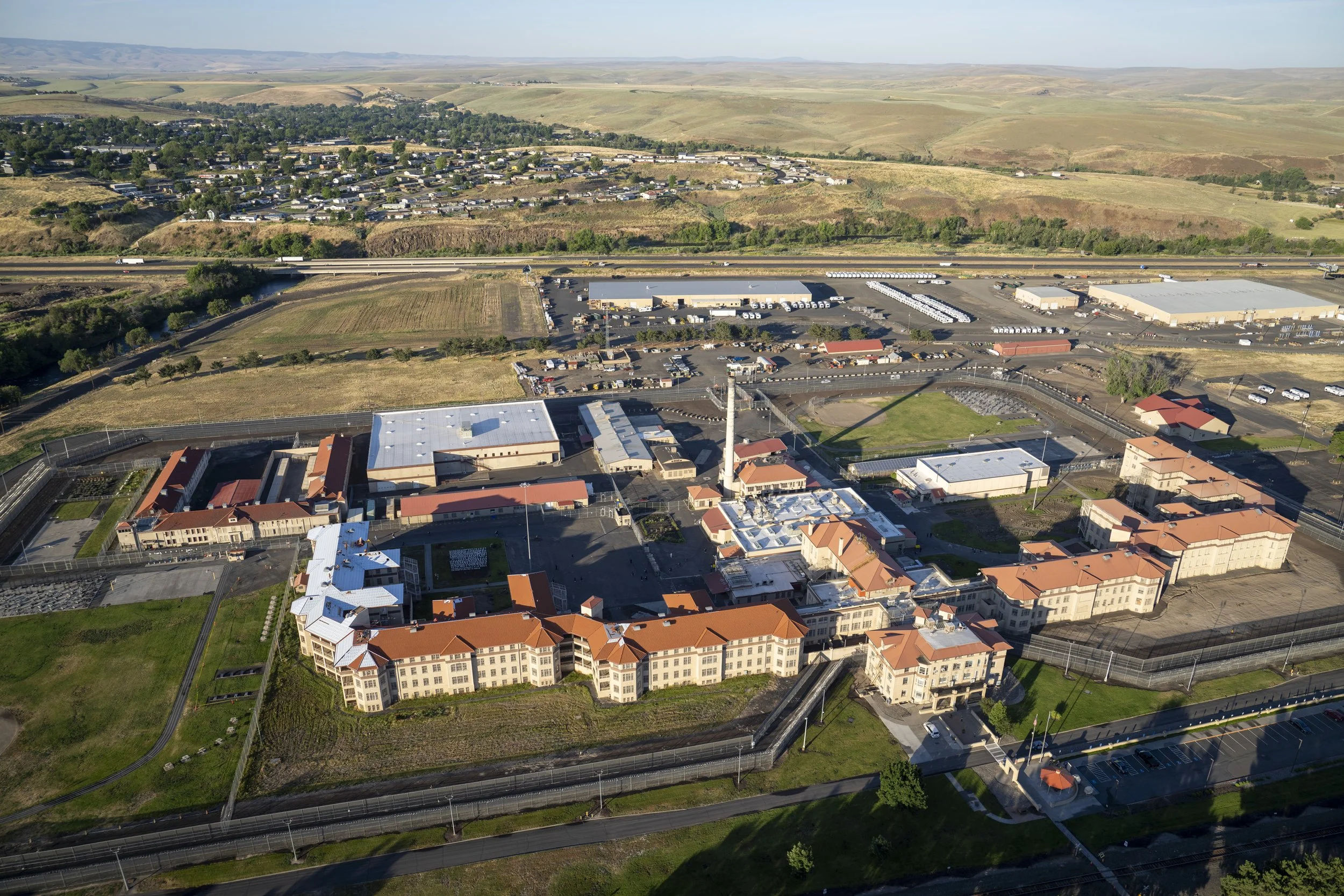
Though the Oregon Department of Corrections included closing Eastern Oregon Correctional Institution in Pendleton on a possible budget reductions list, shutting down the medium-security state prison is an unlikely outcome. (Berit Thorson/East Oregonian, File)
PENDLETON — Despite a social media post circulating from podcast “Oregon D.O.G.E,” it’s unlikely the state will shut down Eastern Oregon Correctional Institution because of budget cuts.
Residents in Pendleton are reacting with concern to a Dec. 31 social media post from the podcast warning people about effects of possible statewide budget cuts.
While it’s true EOCI is on a list of possible reduction options for balancing the state’s 2026 and 2027 budgets, the Oregon Department of Corrections listed closing the prison as one of its worst-case scenarios.
The reduction options were part of an ongoing response to an anticipated statewide budget shortfall from the state’s approved budget for the biennium.
Addressing a budget deficit
The fiscal year 2027 projected general fund balance for the state is negative $63.1 million as of December, up more than $300 million from the state’s September revenue forecast.
The general fund adopted budget for fiscal years 2026-27 is $37.3 billion dollars, meaning the newest anticipated deficit is less than 1% — 0.169%, to be precise — of the total budgeted general fund.
To have a surplus, then, the state needs to adjust its revenues, reductions or costs to make up the difference and more than balance the budget, according to Amanda Beitel, the legislative fiscal officer who serves in a nonpartisan role helping with the state budget.
The total budget beyond the general fund is even larger, reaching nearly $139 billion for the biennium. According to the National Association of State Budget Officers, in the fiscal years for 2026 and 2027, “the combined general and lottery funds enacted budget (are) up 11.7% compared to the previous two-year budget.”
Still, a deficit means plans will have to change to balance the budget.
“ When you’re thinking about a $63.1 million deficit, to resolve that, you’re not really resolving to zero,” Beitel said.
Instead, she said, the Legislature likely will aim to have a balance with a surplus of $300 million to $400 million, or about 1% of the state’s expenditures.
For the 2026 and 2027 fiscal years, the state likely will have to make cuts to anticipated spending to offset the expected deficit. These cuts in planned spending may mean that programs expected to expand cannot or roles planned to be filled are left empty.
Closing EOCI would make waves, not ripples
The Legislature asked state agency department heads to create a two-tier list of reduction options — from preferred to least preferred — that add to a 5% budget reduction for their areas.
Beitel said the drastic drop in the September revenue forecast prompted the 5% reduction option request in October. Legislators wanted to start figuring out possible solutions in case the December revenue forecast created a downward trend. Though the December outlook increased significantly, it still leaves the state in a deficit if no changes to revenue or costs are made.
For the Department of Corrections, even a 5% reduction in its budget for this biennium is still a 9% increase over the 2023-25 statewide budget. Even accounting for inflation, the budget for the DOC would be bigger with a reduction than it was in the previous biennial state budget by about $80 million, according to Legislative Fiscal Office analyst Steve Robbins.
Robbins, who analyzes the Department of Corrections budget for the office, said Oregon’s budget for the DOC mostly accounts for human costs, such as employee wages and the necessary food and medical provisions for the adults in custody. He said it’s challenging for public safety agencies to reach a 5% reduction option without drastic cuts to their operations.
“You have to close prisons in order to hit a number like that,” he said. “By putting an institution like that on the list, they know it’s going to create heartache. They don’t like doing it because it causes communities stress and everything else, but they cannot hit a number without doing it.”
Luckily, he said, it’s highly unlikely the state will close Eastern Oregon Correctional Institution, partly because there just isn’t space to rehouse the adults in custody there and partly because the December revenue forecast improved so much over the September one, putting the state on a lower trajectory reduction path. Furthermore, Robbins said, politicians are aware suddenly closing a prison as large as EOCI wouldn’t sit well with constituents.
“Closing Pendleton — it’s not even on the radar (politically),” he said.
Department of Corrections Director Mike Reese spoke Nov. 17 to the legislators on a subcommittee focused on public safety within the Joint Interim Committee on Ways and Means.
Closing the prison would not only affect broader public safety — as people would be released early from sentences elsewhere to make space for the approximately 1,300 people housed in EOCI — it also would mean more than 400 employees would either need to transfer to another DOC facility or be out of a job.
Reese noted in his written reduction outline that “a significant number (of people) would be laid off in this area with a historically inhospitable employment market,” and closing EOCI would harm the local economy. The outline states about 207 people would lose their jobs.
He also mentioned to the subcommittee the possibility of cuts creates instability and fear.
“When we put these budget cuts out there, employees see a very personal impact on them, and communities feel that same sense of pressure,” he said.
Shutting down EOCI was listed as option 20 out of 21 within general fund reduction options for the Department of Corrections.
Greg Smith, who represents House District 57 — covering part of Umatilla County — and sits on the Joint Ways and Means Committee as co-vice chair, said he has no intention of letting Eastern Oregon Correctional Institution shutdown.
“It’s such a critical asset for the community, and not just Pendleton, for the surrounding areas, that there’s no way we’re gonna allow that to occur,” he said.
Beitel with the Legislative Fiscal Office said closing a prison “is a significant action that likely would not be taken at a 2% reduction level, which is the ballpark of where they’re at now.”
Smith added that next session “we’re probably going to have to make even deeper reductions” than the 2% reduction outlook for the upcoming short legislative session.
An updated revenue forecast is anticipated in early February, which aligns with the start of the short session. Beitel said the upcoming revenue forecast will “inform the final budget plan” for the Legislature in its efforts to rebalance the budget.